








Your cart is empty
Choose a collection to begin.


EMIR LUXE fine jewelry
Choose your stone
Fine jewelry
18, 14 or 10-carat gold
Yellow, white or rose gold depending on the model, set with moissanite, lab-grown diamond or natural diamond.
Fine jewelry
925 silver
925 silver, set depending on the model with moissanite, lab-grown diamond or natural diamond.
Made to measure
Let’s design your jewelry
Stage Collection
Stage and fashion jewellery
EMIR LUXE · 291 pieces
10k gold bracelet: solid, tough gold set with moissanite or diamond, at a gentler cost than 14k and 18k.
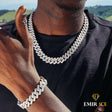
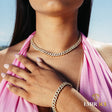
The 10k gold bracelet is solid gold, but the cheapest of the three purities for the same design. It is also the hardest alloy: it stands up best to scratches and knocks. The collection offers 291 designs, mostly gold bracelets for men, with gold bracelets for women, set with moissanite, lab-grown diamond or natural diamond.
Many jewellers sell 9ct gold, which is 375 parts per thousand. 10k is 417 parts per thousand: so it contains slightly more gold for a jewel of the same kind. If you are looking for a 9ct gold bracelet, 10k is its closest neighbour, a notch up in gold content.
The lower the purity, the harder the alloy and the lower the cost. For the same design, 10k costs less than the 14k gold bracelet, which itself costs less than the 18k gold bracelet. To understand hallmarks, read our article on gold jewellery hallmarks.
The colour is slightly paler, because the share of pure gold is lower: 41.7%. If you want the richest shade, turn to 18k. The detail is in our comparison 10K or 14K gold. For a first gold jewel, a sports bracelet or a gift, 10k remains a very sensible choice.
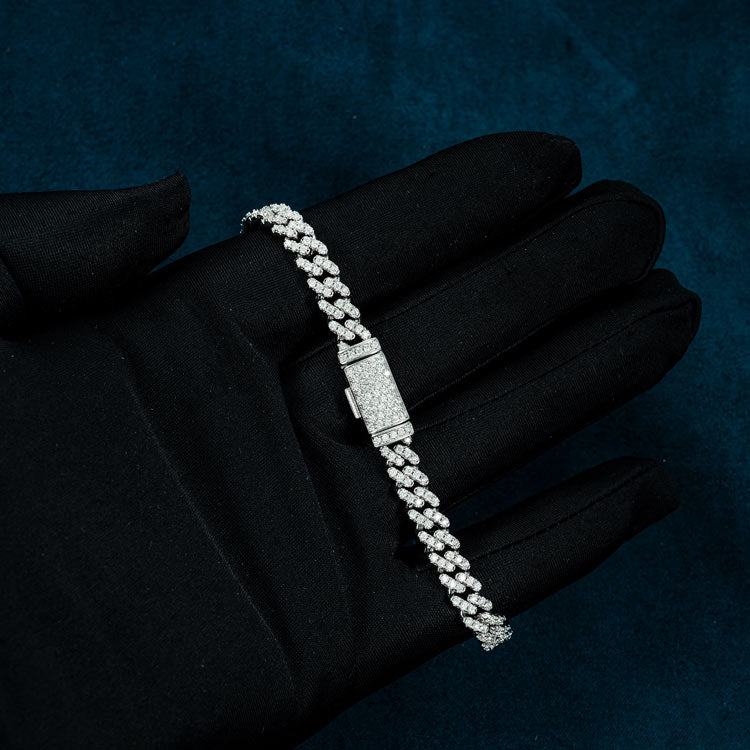
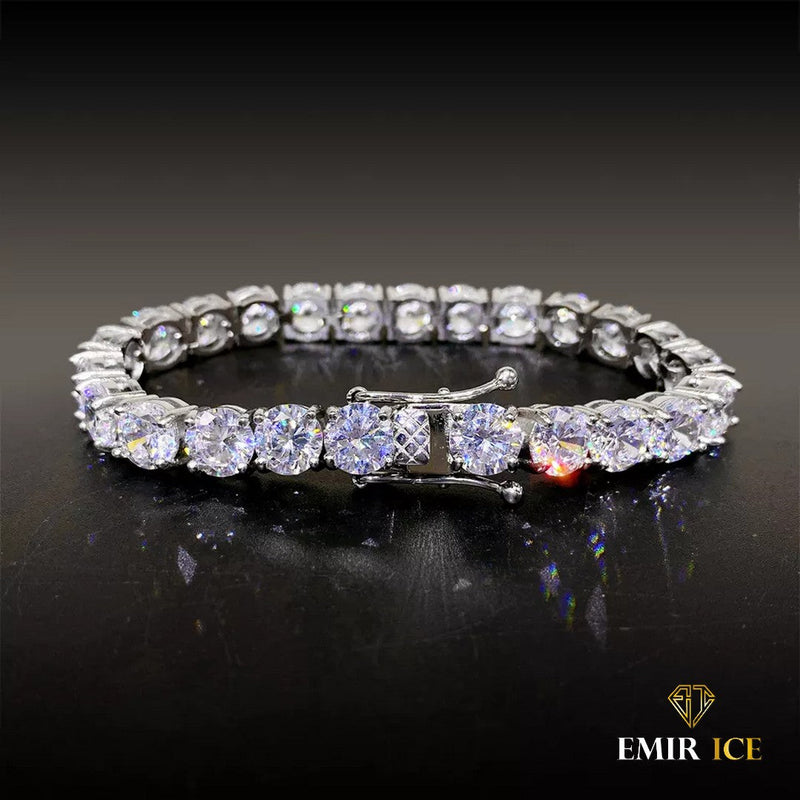
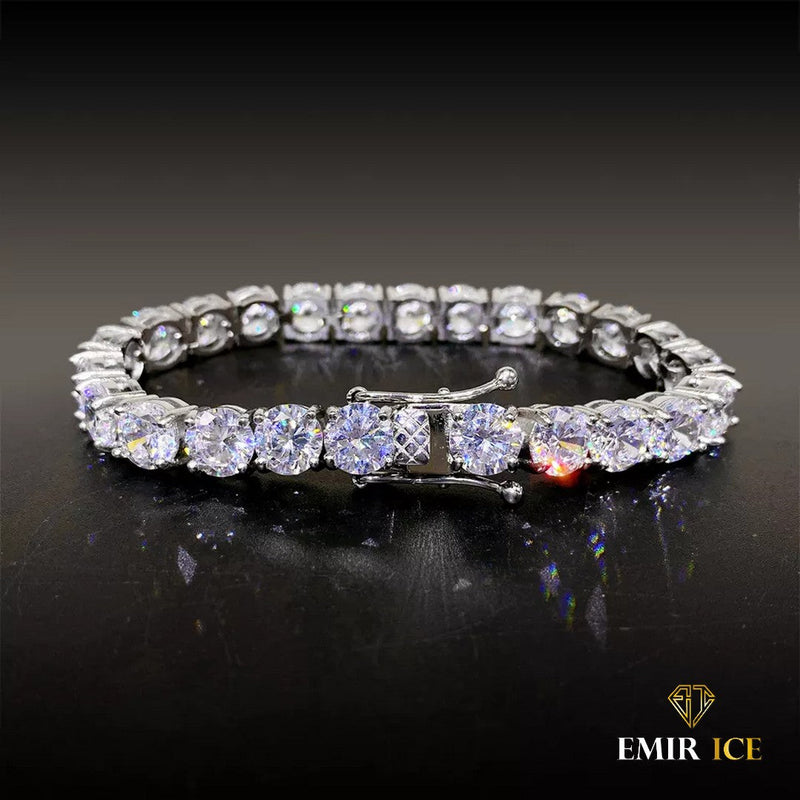
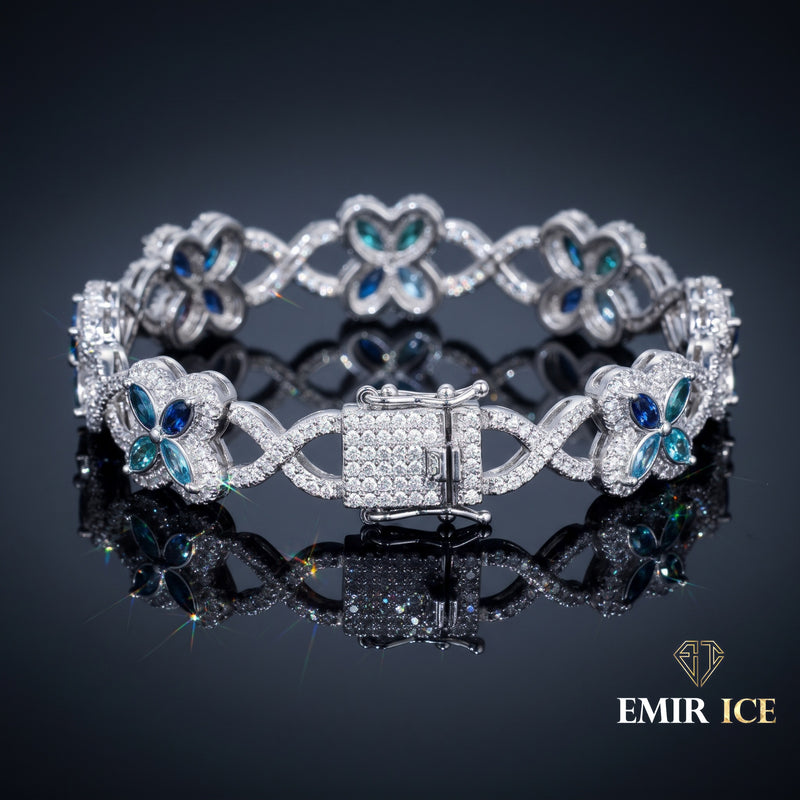
A yellow gold bracelet has the classic shade. The rose gold bracelet is alloyed with more copper. The white gold bracelet is alloyed with pale metals. The gold bangle, rarer here, is a plain ring; tennis and Cuban bracelets are the most numerous.
The tennis bracelets come in 16, 18 and 20 cm, the Cuban ones in 17, 20 and 23 cm. Our size guide explains how to measure your wrist.
Moissanite is created in a laboratory and is very hard (about 9.25 on the Mohs scale). The lab-grown diamond is a real diamond, with the same hardness (10) as the natural one. The natural diamond is the rarest of the three. For a gold and diamond bracelet, see our natural diamond jewellery.
Take it off for sport, housework and swimming. Clean it in lukewarm water, with mild soap and a soft brush, then dry it with a soft cloth. A solid gold bracelet does not oxidise as silver does.
10k is 417 parts per thousand, 9ct is 375: the first contains slightly more gold.
Yes, it is gold all the way through, not plating. It can be repolished.
Yes, it is the hardest alloy of the three purities offered.
Each piece is made to order, with a production time shown on the product page. Shipping times are on the delivery information page.
Choose the metal, stone, finish and length on the product page. You have 14 days to change your mind, except for personalised or made-to-measure jewellery.
Popular searches: gold bracelet, gold bracelet men, mens gold bracelet, gold bracelet women, women gold bracelet, gold bracelet 9ct, white gold bracelet, bangle gold bracelet, gold bracelet tennis, gold bracelet belcher, cuff gold bracelet