
Your Cart is Empty



Quavo's $250,000 Grillz
Although rarer, emerald-cut diamonds are less expensive than round or princess-cut diamonds; the same cannot be said for Quavo's new emerald-cut grillz.…
Read the article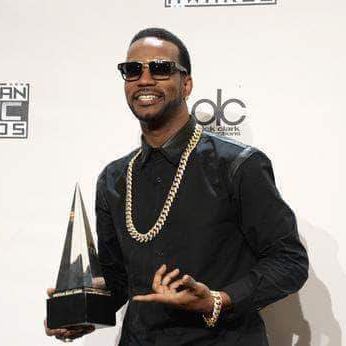

We have seen many hip hop jewelry collections from some of the biggest rappers in the past, but Juicy J's ice gives us pieces that are both simple and complex. The former Three 6 Mafia rapper teamed up with GQ to showcase his collection and explain how his pieces were first inspired by Jay Z.
"It was mostly Jay Z who really inspired me," says Juicy J in the video below. "I started seeing all the diamonds and platinum things he was wearing and I told myself I needed platinum to get a platinum watch. He was always saying: 'You have to wear platinum, you can't be wearing silver.'"
Juicy showed more of his pieces like his 90s Hypnotize Minds chain and his two Taylor Gang chains that were given to him by label owner Wiz Khalifa. Juicy has a collection of dope rings, including one from his stepfather, and another that features a crown, which makes him feel like a self-proclaimed king. "I treat myself, man, you know, if I'm feeling the vibe, I call TV Johnny and I'm like yo, I need some rings," he says.
What the GQ interview reveals, first and foremost, is a story about white metal. Juicy J explains himself that his taste for platinum and silver comes from what he saw worn around him, and this preference structures his entire collection. A jewelry wardrobe built around cold metal reads quite differently from a collection made entirely of yellow gold.
The second marker is layering. The article mentions several chains that coexist: vintage pieces, gifted pieces, recent pieces. This is not a collection where you wear a single necklace at a time, but a deliberate stacking where each chain tells a story. This is precisely the technical challenge that we will break down below.
Third marker: the contrast between simple and ornate. Some pieces are understated, almost bare; others are fully iced out. This mix works because it creates a visual hierarchy. If everything shines at the same level, nothing stands out.
Finally, the hand. Rings here play an accompanying role: they extend the vocabulary of the torso without competing with it. In this type of style, the hand serves as a reminder, not an entry point.
Layering is not the same as accumulating. A successful stack follows two very concrete principles: sufficient differences in length, and a variation in thickness that goes from thin to wide as you go down.
In practical terms, you want at least a 5 cm gap between two adjacent chains, and more like 8 to 10 cm if both pieces are iced out. Without this space, the chains overlap, tangle, and scratch each other.
One final adjustment matters: the collar of the garment. The higher it is, the shorter the shortest chain needs to be; otherwise, it disappears under the fabric and the layering visually collapses.
Here is the technical module of this article. Layering is the most difficult exercise in the hip-hop wardrobe because three variables interact at the same time: length, thickness, and link type.
The length. It determines the staging. A 45 to 50 cm chain sits at the base of the neck. At 55 cm, it rests on the collarbone. At 60 cm, it reaches the top of the sternum, and at 70 cm it sits clearly on the chest. It is these levels, not 2 cm differences, that create a readable stack.
The thickness. It determines the visual weight. A 4 mm chain is a stroke, an 8 mm chain is a line, a 12 mm chain is a band. Layering three strokes gives an impression of blur; layering three bands creates mass. It is the gradual transition from stroke to band that creates depth.
The link. It determines the texture. Two chains of the same link type and similar width read as a failed duplicate. Combining a flat, rigid link with a flexible, rounded link immediately creates relief, even with the same metal.
Comfort. A forgotten but decisive variable: the sum of the weights is carried on the same neck. Three heavy pieces become painful after an hour and are evident in one's posture. It is better to wear two chains with ease than three while hunching your shoulders.
| Level | Length | Width | Role in the stack |
|---|---|---|---|
| High | 45 to 50 cm | 3 to 5 mm | Line of light near the face |
| Middle | 55 to 60 cm | 6 to 9 mm | The pivot, which can also be worn alone |
| Low | 65 to 75 cm | 10 mm and up | The visual anchor, holds the pendant |
One practical detail to finish: the clasps. When multiple chains cross at the back of the neck, the clasps get stuck in each other. You gain a lot by deliberately offsetting their positions by slightly rotating each chain after fastening it.

Four chains that allow you to compose a clean stack, from the thin stroke to the wide line, while keeping a coherent dominant metal.
If you want the complete roadmap of the subject before buying, our reference guide on American rapper jewelry reviews every family of pieces — chains, pendants, grillz, watches, and glasses — and explains in what order to acquire them.
To dive deeper: how to wear a good jewelry collection in three steps, white gold or silver, how to choose your cold metal, and all about cuban link chains.
As for the store, two useful sections to build a stack: diamond chains and best-selling hip-hop jewelry. Also read: the collection presented by jeweler Johnny Dang.
Juicy J jewelry · Memphis rapper jewelry collection · layering multiple men's chains · chain layering length gap · 4 mm and 8 mm chain together · how to wear two necklaces men · tennis chain with cuban chain · white metal hip hop jewelry · rapper silver or platinum chain · how many chains to wear at once
Although rarer, emerald-cut diamonds are less expensive than round or princess-cut diamonds; the same cannot be said for Quavo's new emerald-cut grillz.…
Read the article
Flipp Dinero's jewelry collection features gifts from some serious icons, such as DJ Khaled. From his $55,000 "Dinero Gang" pendant to his…
Read the article
DDG (Darryl Dwayne Granberry Jr.) didn't always love his favorite piece in his Hip Hop jewelry collection, but it has now become…
Read the article