















Your cart is empty
Choose a collection to begin.


EMIR LUXE fine jewelry
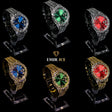
Choose your stone
Fine jewelry
18, 14 or 10 karat gold
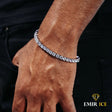
Yellow, white or rose gold depending on the model, set with moissanite, lab-grown diamond or natural diamond.
Fine jewelry
925 silver
925 silver, set depending on the model with moissanite, lab-grown diamond or natural diamond.
Made to measure
Let’s design your jewelry
Stage Collection
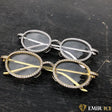
Stage and fashion jewelry


Today, lab-grown diamonds are attracting more and more couples, fashion enthusiasts, and discerning buyers in search of ethical, accessible, and dazzling jewelry. But one question remains: are they really cheaper than natural diamonds? The jeweler Emir iCE provides a clear and comprehensive comparison to help you choose your diamond with complete confidence, without compromising on quality or brilliance.
A lab-grown diamond is an authentic diamond, created through advanced technological processes such as CVD (Chemical Vapor Deposition) or HPHT (High Pressure High Temperature). Chemically, physically, and optically identical to diamonds mined from the earth, they are indistinguishable to the naked eye. The only difference lies in their origin: one is formed naturally over billions of years, the other in a laboratory in just a few weeks.
| Features | Lab-grown diamond | Mined diamond |
|---|---|---|
| Average price (1 carat, VS1, G color) | €1,062 – €2,655 | €4,247 – €6,370 |
| Price per carat | 30 to 50% cheaper | Higher |
| Appearance | Identical | Identical |
| Environmental impact | Reduced | High |
| Resale value | Lower | Higher |
| Availability | Constant | Limited |
A 1-carat lab-grown diamond certified by IGI or GIA, G color and VS1 clarity, costs between €1,062 and €2,655. For comparison, an equivalent natural diamond ranges between €4,247 and €6,370. With Emir iCE, you can therefore opt for a larger or purer stone for the same budget, a decisive advantage when purchasing a lab-grown diamondengagement ring.
Lab-grown diamonds are not chosen for their resale value but for their emotional and aesthetic value. Their production, which is less limited than that of natural diamonds, leads to constant changes in pricing. At Emir iCE, we recommend viewing these diamonds as a personal indulgence or precious gift, rather than as a financial investment.
At Emir iCE, we offer only certified lab-grown diamonds, selected for their exceptional sparkle and quality. Our creations combine refinement, durability, and affordable prices, whether they are set silver rings, diamond necklaces, or unique wedding bands. Each piece of jewelry is designed to enhance your most precious moments, with the certainty of making a responsible choice.
Yes, lab-grown diamonds are significantly cheaper than natural diamonds while offering the same brilliance and beauty. They represent a modern, ethical, and ecological alternative, ideal for an engagement ring, a unique gift, or everyday jewelry. With Emir iCE, you gain access to high-end jewelry that combines prestige, elegance, and ethical values.
The question of the price of lab-grown diamonds is too often summed up in one line: "it's cheaper than natural." That is true, but it explains nothing. Two lab-grown stones of the same weight can have very different prices, and a buyer who does not know why will overpay for an invisible characteristic while saving on one that is truly visible.
A diamond's price, whether grown or mined, is based on the same evaluation grid: the 4Cs, which are carat, color, clarity, and cut. Added to this are elements that have nothing to do with the stone itself: the jewelry metal, the complexity of the setting, the laboratory that issued the report, and the service accompanying the purchase.
The principle to remember above all else: price does not rise linearly. Every step up the quality scale costs significantly more, while visual perception stops improving long before the scale ends. The art of purchasing lies in stopping just before that tipping point.
Carat is a unit of mass, not apparent size. One carat is 0.20 grams. This is a crucial nuance: two stones of the same weight can have different diameters depending on how the material was distributed by the cutter. A stone cut too deeply "hides" its weight below the girdle, where no one sees it.
Demand is concentrated on round weights—half a carat, three-quarters, one carat—because those are the weights buyers ask for aloud. As a result, the price jumps just past these thresholds. Dropping slightly below a symbolic weight often lowers the bill without the eye perceiving the difference on the finger.
For a 1-carat lab-grown diamond, this threshold effect also exists, simply at a lower price level. The logic of the trade-off remains strictly the same as for natural diamonds.

The diamond color scale goes from D, colorless, to Z, where the yellow or brown tint becomes clearly visible. It does not describe "fancy" colored diamonds: it measures the absence of tint in a white stone.
The grading is done by comparison with master stones under standardized lighting conditions, and most often stone face down, that is, viewed from the side on a white background. This is important because a stone mounted face up reflects so much light that the tint becomes much harder to perceive.
Two grades of difference on the scale are rarely perceptible to the naked eye once the stone is set. Conversely, the difference in price is very real. This is the first area where an informed buyer saves money without losing anything visually.
The metal plays a decisive role in this trade-off. On yellow or rose gold, a slightly tinted stone blends into the setting and becomes undetectable: paying for absolute colorlessness makes no sense. On white gold or platinum, however, the contrast is sharper, and a marked tint eventually becomes noticeable.
Some diamonds react to ultraviolet light with luminescence, most often bluish. On a slightly tinted stone, this reaction can visually compensate for a hint of yellow. On a stone that is already very colorless, strong fluorescence is sometimes considered less desirable and is priced accordingly. It is a criterion to be aware of, but not a defect in itself.
The diamond clarity scale goes from FL, no inclusions visible under 10x magnification, to I3, where inclusions are very visible to the naked eye. The point that almost all buyers miss: this ranking is established under a 10x loupe, not the naked eye. A mid-range grade can therefore be perfectly clean to a normal gaze.
An inclusion is not judged solely by its size. Its position and nature matter just as much. A small inclusion placed under the table, in the center of the visual field, is more distracting than a larger inclusion hidden near the girdle, which the setting will cover.
This is why two stones with the same clarity grade can produce a very different impression. The gemological report provides a plotting diagram of the inclusions: it is the most useful part of the document, and almost no one reads it.
The reasonable goal, for a piece of jewelry worn daily, is a stone that is eye-clean: no inclusions visible without a loupe at a normal reading distance. Paying for higher grades amounts to buying written information on a certificate rather than a perceived difference.
Carat, color, and clarity are determined by the stone's growth. Cut quality, however, is entirely the result of the cutter's work. It determines how light enters the stone, bounces off the pavilion facets, and exits through the table toward the eye.
A pavilion that is too deep lets light escape through the bottom: the stone appears dark in the center. A pavilion that is too shallow lets it pass through: you get a window effect, a dark center. Between the two, a window of proportions that produces the crisp light return known as brilliance.
If one criterion had to be prioritized when balancing a budget, this would be it. A well-cut stone with an average color grade will always be more spectacular than a poorly proportioned colorless stone.
A lab-grown diamond is born from two major families of processes. HPHT replicates the high-pressure and high-temperature conditions in which carbon crystallizes deep underground. CVD grows the stone layer by layer, from a carbon-rich gas decomposed in a low-pressure chamber onto a diamond seed.
Both paths result in the same material: pure carbon crystallized in the cubic system. They do, however, leave different growth signatures that laboratories can read, which explains some of the price differences observed between one stone and another.
Practically speaking, almost nothing to the eye. The differences lie in the growth structure and in any post-growth treatments aimed at improving the color of a grown stone. These treatments are legitimate; they simply must be noted on the report, and it is the laboratory's role to declare them.
Yes, unequivocally. A lab-grown diamond is chemically, physically, and optically a diamond: same composition—carbon—same crystal structure, same hardness of 10 on the Mohs scale, same refractive index, same optical behavior. It is not an imitation.
This is precisely what distinguishes it from simulants. Cubic zirconia is a zirconium oxide, with a hardness of about 8, much higher density, and a totally different composition: it mimics the appearance of a diamond without sharing its nature. Moissanite is silicon carbide, with a hardness of 9.25, a refractive index higher than that of diamond, and stronger dispersion, hence that very recognizable rainbow fire.
In other words: the lab-grown diamond belongs to the same mineral species as the mined diamond; zirconia and moissanite are other materials, with their own qualities. To untangle the commercial vocabulary that intentionally maintains confusion, our article on the so-called "lab-grown zircon diamond" sorts it out term by term.

A gemological report is not a certificate of authenticity in the legal sense, nor an estimate of value. It is the technical description of a stone by an independent laboratory at a given date. For a grown stone, it explicitly indicates the origin laboratory-grown, often coupled with a mention of the growth process.
This engraved number is the element that physically links the document to the stone. It is verified with a loupe and cross-referenced with the laboratory's public database. A report without a verifiable match has no informational value.
It proves neither a fair price, nor the quality of the mounted jewelry, nor the beauty of the stone. Two stones with identical reports can be very different to the eye, because the position of inclusions and micro-proportions cannot be reduced to a letter and a number.
The commercial thermal diamond tester measures thermal conductivity. It distinguishes a diamond from a cubic zirconia very well. However, it makes no distinction between a lab-grown diamond and a mined diamond, and for good reason: they are the same material, with the same physical properties.
Dual-probe testers add an electrical conductivity measurement to rule out moissanite, which thermal-only models sometimes incorrectly classify as diamond. This is useful, but it still does not answer the question of origin.
Distinguishing between lab-grown and mined requires laboratory equipment: spectroscopy, fluorescence imaging, and analysis of growth patterns. No counter-top test can do it reliably. This is why the gemological report remains, in practice, the only practical answer to the question of origin. Our guide on how to recognize a real natural diamond details field tests and their limitations.
This is where honesty is better than commercial enthusiasm. The resale value of a lab-grown diamond is structurally lower than that of a comparable mined stone, and this is for simple reasons.
We must add a truth that also applies to natural stones: between the retail price paid and what an individual recovers at resale, the gap is considerable in both cases. A piece of jewelry is not an investment, and a lab-grown diamond even less so than another. It is bought to be worn, for what it represents, and for the pleasure it brings.
The counterpart is real: for the same budget, the lab-grown stone provides access to combinations of carat, clarity, and color that would remain out of reach for a natural one. It is a trade-off between immediate enjoyment and residual value, and there is no universal right answer.
Here is the method we recommend, in this order, when the budget is fixed in advance.
| Priority | Criterion | Why | Where to save |
|---|---|---|---|
| 1 | Cut quality | Controls the sparkle, visible at all times | Nowhere: this is the aspect not to sacrifice |
| 2 | Visible clarity | An inclusion that can be seen is never forgotten | On higher grades, invisible without a loupe |
| 3 | Color | Strongly depends on the metal of the setting | One or two notches, especially on yellow or rose gold |
| 4 | Carat | Threshold effect on round weights | Just below a symbolic weight |
The tight budget that wants presence. Aim for an excellent cut, clarity that is eye-clean, a median color, and a weight just below the round threshold. A yellow gold setting amplifies the effect and masks the tint.
The comfortable budget that wants an impeccable stone. First move up on color if the setting is white gold, then on clarity, and keep the weight reasonable. Cut excellence remains non-negotiable.
The buyer who wants visual volume. Favor elongated shapes, oval or marquise, which present a larger apparent diameter for a given weight, and a halo that widens the set without multiplying the center carat.

It is systematically forgotten: on a finished piece of jewelry, a significant part of the price does not come from the stone. The weight of gold actually used, the metal hallmark, the number of side stones, and the complexity of the setting weigh heavily.
The choice of metal is reasoned in conjunction with the stone's color, and our guides dedicated to choosing metal and the comparison of invisible settings delve into each of these points.
| Criterion | Lab-grown diamond | Mined diamond | Moissanite |
|---|---|---|---|
| Composition | Crystallized carbon | Crystallized carbon | Silicon carbide |
| Mohs Hardness | 10 | 10 | 9.25 |
| Nature | Real diamond | Real diamond | Other gem, not an imitation |
| Fire / dispersion | Identical to natural | Reference | Significantly more marked |
| Origin | HPHT or CVD | Geological formation | Almost exclusively synthetic |
| Price position | Lower than natural | The highest | The most accessible of the three |
| Resale | Low | Better but heavily discounted | Marginal |
For a detailed comparison between lab-grown stones and moissanite, our dossier moissanite versus diamond and the pillar dedicated to the rise of moissanite in jewelry usefully complement this table.
Since the material is identical to a mined diamond, maintenance is too. The hardness of 10 protects against scratches from daily life, but hardness is not toughness: a sharp blow on an edge can still chip a stone.
Our advice for cleaning gold jewelry applies entirely to a setting with lab-grown stones.
A selection of pieces currently available in our catalog.
Yes. It is composed of crystallized carbon, exactly like a mined diamond, with the same hardness of 10 on the Mohs scale and the same optical properties. It is not an imitation, unlike cubic zirconia.
Because the 4Cs apply in the same way as for natural ones: weight, color, clarity, and especially cut quality determine the value. The setting, the metal, and the type of setting also weigh heavily on the price of the finished piece.
It explicitly indicates the laboratory origin, often the growth process, the 4C grades, proportions, fluorescence, potential treatments, and the inclusion map. A number engraved on the girdle links the document to the stone.
No. A thermal tester separates diamond from cubic zirconia, and a dual-probe model rules out moissanite, but neither distinguishes a lab-grown stone from a mined stone since the material is identical. Only a equipped laboratory can do so.
Its resale value is structurally lower than that of a mined stone, because the supply is reproducible and the second-hand market is still shallow. Jewelry is bought to be worn, not as an investment.
Cut quality first, as it commands the sparkle visible at all times. Then eye-clean clarity, followed by color depending on the metal of the setting, and finally carat, placing yourself just under a round weight.
The price of a lab-grown diamond follows the same rules as that of a mined stone, on a lower pricing base. Understanding the 4Cs, knowing that a report describes rather than assigns value, accepting that resale is not the goal: these three ideas are enough to make a lucid purchase.
Our conviction is simple: better to have a beautifully cut stone, eye-clean, mounted on a metal that highlights it, than an accumulation of grades paid for at a premium price that are invisible on a daily basis. This is how we select our stones.
Discover our lab-grown diamond jewelry, compare with our natural diamond pieces, and let yourself be guided through our engagement rings to find the stone that truly matches your budget and your hand.
Frequent searches: lab-grown diamond prices · 1 carat lab-grown diamond price · lab-grown vs natural diamond · is a synthetic diamond a real diamond · difference between HPHT and CVD · IGI lab-grown diamond certificate · lab-grown diamond resale value · diamond color scale D to Z · diamond clarity scale VS1 SI1 · eye-clean diamond · lab-grown diamond engagement ring price · lab-grown diamond or moissanite · cubic zirconia or diamond · how to read a diamond certificate · what carat to choose for an engagement ring.

Une rivière de diamants est une ligne continue de pierres identiques serties l'une contre l'autre, en collier ou en bracelet. Découvrez la…
Read the article
Le prix d'un diamant dépend du carat, de la couleur, de la pureté, de la taille et de l'origine, naturelle ou de…
Read the article
Comment calculer le prix de l'or 18 carats : le cours de l'or pur du jour, multiplié par 75 % et par…
Read the article


