





















Your cart is empty
Choose a collection to begin.


EMIR LUXE fine jewelry
Choose your stone
Fine jewelry
18, 14 or 10-carat gold
Yellow, white or rose gold depending on the model, set with moissanite, lab-grown diamond or natural diamond.
Fine jewelry
925 silver
925 silver, set depending on the model with moissanite, lab-grown diamond or natural diamond.
Made to measure
Let’s design your jewelry
Stage Collection
Stage and fashion jewellery


Guide updated and enriched by Emir ICE. In addition to the shooting schedule, this dossier covers a point that everyone misses: how to film and photograph jewelry. Why an iced-out piece looks bad on camera, how to position the light, which background to choose, which lens, which settings, how to make the stones sparkle in slow motion, and how to prepare the pieces before shooting. Two tables, a glossary, and an FAQ complete the set.
Since the first broadcast of "Video Killed the Radio Star" on MTV in 1981, the music industry has experienced several visual revolutions: MTV, YouTube, TikTok… and now, in 2025, generative AI enters the scene. Today’s rappers are no longer satisfied with just a good flow: they are also image producers, art directors, stylists, and sometimes even low-code developers thanks to smart tools. 🎥
Artists like Travis Scott, Lancey Foux, or Laylow are already using AI tools to create surreal or interactive music videos by adding animated elements, AI-generated landscapes, or stylized glitch effects.
Before you even take out the camera, ask yourself one question: what do I want people to remember about me? Are you that elegant rapper with a luxury look? A pure product of the street? A discreet poet? Everything starts there.
The best videos aren't the most expensive ones — they are the ones that reflect a unique vibe. Central Cee, SDM, Dinos, or Gazo don't have the same visuals, but each one imposes their own vision.
Create a consistent art direction with your image, your flow, your clothes, and above all… your jewelry.
A good video doesn't necessarily cost a fortune, but every euro must be invested intelligently: videographer, styling, scouting, accessories, transport...
Prioritize the elements that will really boost the visual rendering: a good videographer
The quality of the editing makes or breaks a video. Even if your budget is tight, find a passionate young videographer with a good vision who knows how to handle lighting, transitions, and storytelling.
💡 Search on Insta or TikTok for video content creators in your area. Type “clipmaker [your city]” or “hip-hop videographer Paris” and check their style. Collaborate intelligently.
You can't make a rap video without a solid look. That's where Emir ICE comes in.
✔️ Cuban chains, custom pendants, bust down watches, iced out rings… These are elements that catch the light and enhance your presence on screen.
Add to that a clean outfit (cargo or denim + puffer jacket, street suit, or all-black), and you have a killer silhouette.
You want spots that tell a story. Not just "I'm standing in front of a wall." Here are some trendy ideas for 2025:
- Urban rooftops
- Minimalist studio interior with colored LEDs
- Neon underground parking lot
- Luxury apartment with a panoramic view
- Industrial zone or street soccer field
💡 Alternate between wide shots and close-ups on you + your jewelry (zoom on the watch or pendant = viral moment on TikTok).
Even a "freestyle" video benefits from having a structure. Break the song down into visual highlights:
- Intro = dark scene + close-up
- Chorus = dynamic shots (cars, crowd, energy)
- Verses = storytelling or street / posed shots
💡 Tip: also shoot a short vertical version for TikTok & Instagram Reels.
Ambient shots = gold. Film stylish shots of:
- Your diamond watch resting on a steering wheel
- You walking in slow motion, smoke, ambiance
- Zoom on your jewelry with the sun hitting it
- A strong gesture with the crowd behind you
All these elements will feed your socials and can even be used for promo visuals.
Today, you can edit a professional video with accessible tools:
- DaVinci Resolve (free, powerful)
- Adobe Premiere Pro 2025 (with AI for rhythm)
- CapCut Pro for stylish Reels
Add animated subtitles, slow motion, vintage or neon effects… but don't overdo it. The 2025 aesthetic is clean, dark, elegant.
Once edited, your video doesn't exist until it's seen. Here is a simple plan:
- Post a 10s teaser trailer on Insta + TikTok
- Schedule the YouTube release for 6 PM on a Sunday
- Tag the brands you are wearing (including Emir ICE)
- Use the Spotify Canvas format to tease in your profile
- Create a challenge if the track is suitable
In rap videos, style is all about details.
✔️ Thick Cuban link chain
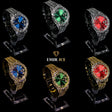
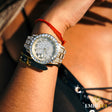
✔️ Custom moissanite bust down watch
✔️ Custom pendant with your name or logo
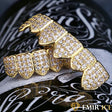
It's this jewelry that makes you shine on camera. At Emir ICE, everything is custom-made or limited edition. Want a unique piece of jewelry? Click here: Emirice Custom Jewelry.
Invest in your vision, your image quality, and the right accessories.
Don't just copy what others are doing — create your own look, your own vibe. And above all, don't forget that your style, your attitude, and your bling account for 50% of the visual impact.
To shine like a pro: Emirice.com
French rapper Laylow became famous not just for his music, but for his futuristic and digital visual universe. In his videos, we see computer interfaces, talking AIs, and visuals inspired by the metaverse. This mix of raw rap and cutting-edge technology is very popular with the new generation.
Rap video is first and foremost a demonstration of style. In 2025, oversized cuban links, moissanite bust down watches, and custom pendants are still the kings of the game.
Tip: At Emir ICE, we offer a 100% custom-made jewelry service: you send your idea via Instagram (@emirice24k), we make you a sketch, a 3D model, and we manufacture a piece of jewelry that represents you 100%. It’s THE detail that changes everything in a video — the jewelry that says: “I’m not like the others”.
With a good script, a sense of aesthetics, the right jewelry, and some AI tools at your fingertips, you can produce a music video worthy of the biggest record labels — without necessarily signing to them. The future belongs to independent and well-styled artists.
At Emir ICE, we know that starting in rap isn't always done with full pockets. That's why we offer Cuban chains, bust down watches, and customized pendants at accessible prices without ever sacrificing style or quality.
Want a piece of jewelry that shines in your video without breaking your budget? Message us on @emirice24k – we do custom-made pieces for artists. Free design, 3D modeling available, fast production.
🚀 Make your talent shine. Even on a tight budget.
Emirice.com – the jeweler for the real ones.
The shooting schedule above covers art direction, locations, editing, and promotion. One technical subject remains, which nonetheless decides the final result: close-ups of the pieces.
A piece of jewelry is the most difficult object to film, much more so than a face or an outfit. It is small, shiny, reflective, and it reflects everything around it, including the camera and the operator.
The rest of the guide deals exclusively with this point: light, background, lens, settings, slow motion, and preparation of the pieces.
A polished piece of jewelry behaves like a mirror. It doesn't reflect a color; it reflects an image: that of the piece, the walls, the ceiling, the camera, and you.
This is called specular reflection. Unlike fabric, which diffuses light in all directions, polished metal sends it back in a single direction, like a billiard ball.
Direct consequence: you are not lighting the jewelry; you are lighting what is reflected in it. Filming a piece of jewelry means composing the set it will reflect.
A faceted stone reflects extremely intense points of light, right next to very dark areas. The gap can exceed what the sensor can record.
Classic result: either the sparks are white and empty, or the metal is drowned in black. The task is to reduce this gap without killing the sparkle.
At very close range, the depth of field becomes tiny. A 12mm chain filmed up close can have a sharp area of only a few millimeters.
That is why manual focus and stabilization are not comfort options but necessities.
The fundamental rule can be summed up in one sentence: the larger the source relative to the jewelry, the softer and more readable the reflection.
A small bare lamp creates a harsh, tiny, unsightly light point. The same lamp passing through a 60 cm diffuser creates a continuous strip of light that outlines the shape of the piece.
A window veiled by a white curtain is, by far, the best free source for this type of shot.
Tracing paper, a sheet of frosted plastic, a stretched white sheet: any diffuser placed between the source and the jewelry transforms the result.
The closer the diffuser is to the jewelry, the larger it appears from the perspective of the piece, and therefore the more enveloping the reflection is.
A source placed behind the piece, slightly offset, creates a luminous edge on the outlines. It is this edge that separates the jewelry from the background and gives it depth.
On a dark background, a simple backlight is often enough to get a spectacular shot, without any other lighting.
Light arriving almost parallel to the surface reveals the textures: the grain of a setting, the boundary between two links, the cut of a claw.
This is the lighting to favor when you want to show the craftsmanship rather than the sparkle of the stones.
The background is not a decorative detail: it is half the image, because it is reflected in the piece.
A dark matte background is the safest choice for a light and shiny piece of jewelry. It makes every point of light stand out and avoids unwanted reflections.
A light background is better suited to dark or highly textured pieces, but it requires strong backlighting so the jewelry doesn't get lost.
Avoid shiny surfaces and busy patterns: they will all return, mirrored, in the metal.
Black velvet absorbs almost all light and provides a perfectly neutral background. However, it collects dust, which is very visible in close-ups.
A slab of stone or concrete adds texture without reflecting. It is an excellent compromise for an urban look consistent with the hip-hop universe.
Leather gives character but reflects more: save it for shots where the reflection is intentionally part of the image.

On a highly reflective piece, the scenery visible in the metal counts as much as the piece itself.
The focal length changes the perspective, and therefore the perceived shape of the jewelry. A wide-angle lens that is too close distorts the proportions and stretches the foreground links.
A focal length from 50 to 100 mm in full-frame equivalent gives a natural rendering and allows you to stay at a reasonable distance from the piece.
Beyond that, a short telephoto lens compresses the planes and beautifully isolates the jewelry, at the cost of needing more space.
A macro lens allows you to focus within a few centimeters and fill the image with a single link. It is the ideal tool for detail shots.
Failing that, an extension tube placed between the camera body and the lens brings the minimum focusing distance closer at a lower cost.
On a smartphone, macro mode gives decent results in abundant light, but the depth of field is very short: be sure to stabilize.
In close-up, a wide aperture reduces the sharp area to almost nothing. Stop down to f/5.6, f/8, or f/11 to keep the whole piece sharp.
Be careful, however: beyond f/16, diffraction begins to soften the image on most sensors.
Stay at the base sensitivity, between 100 and 400 ISO. Digital noise is particularly visible in the dark areas surrounding a piece of jewelry.
If the image is too dark, add light or slow down the shutter speed rather than cranking up the ISO.
In video, keep to the classic rule: a shutter speed roughly double the frame rate. At 25 frames per second, aim for 1/50.
For smooth slow motion, shoot at a high frame rate, 60 or 120 frames per second, with enough light to compensate.
Autofocus constantly hunts on a shiny surface without clear contrast. Switch to manual, focus on the sharpest edge, then lock it.
Use focus assist, often called focus peaking, to precisely visualize the sharp area before starting the recording.
| Light position | Result obtained | Ideal for | Pitfall |
|---|---|---|---|
| Large side source | Soft and continuous reflection | Chains, bracelets, volumes | Opposite side too dark |
| Offset backlight | Luminous edge on the contours | Separate from the background | Veiling glare if the source enters the frame |
| Grazing light | Distinct texture and relief | Settings, engravings, finishes | Shadows too harsh |
| Overhead diffuser | Enveloping, neutral lighting | Catalog shots and packshots | Flat rendering, lacking drama |
| Bare point light source | Sharp and harsh highlights | Sparkle of the stones | Blown-out areas with no detail |
| White reflector underneath | Opens up low shadows | Rings and placed pieces | Loss of contrast if too close |
The sparkle of a stone only exists in movement. A stone at rest under a still light does not sparkle: it shines, which is quite different.
To obtain glints that turn on and off, you need relative movement between the source, the piece, and the camera.
Move the camera. A slow tracking shot on a rail, or a slide of a few centimeters, is enough to sweep across the facets.
Move the piece. A slow rotating turntable gives a very regular sparkle, perfect for a presentation shot.
Move the light. Slightly shifting the source during the take creates lively glints without touching the jewelry.
Shooting at 60 or 120 frames per second and then playing back at 24 or 25 stretches the movement and makes each glint legible.
Slow motion requires a lot of light, as the shutter speed mechanically increases. This is why these shots are filmed using powerful continuous lighting.
A tripod is essential. At these magnifications, a shaky hand becomes a tremor on the screen.
A close-up is unforgiving. A fingerprint invisible to the naked eye becomes a greasy stain on a 120 fps shot.
Clean each piece in lukewarm water with a drop of neutral soap and a very soft-bristled brush, then dry with a microfiber cloth. Our detailed advice can be found in how to clean your gold jewelry.
Wear cotton or nitrile gloves for any handling between cleaning and shooting.
Have a blower and a soft brush on set: dust settles constantly and is immediately visible in macro.
A chain piled in a heap tells no story. Form a regular curve, letting one or two links detach to create a focal point.
Use repositionable adhesive putty, nylon thread, or a small transparent stand to keep the piece in the desired position.
Always point the best-finished side toward the camera, and check that no claw is pointing toward the lens: it would create a stray reflection.

A piece worn on the face must be cleaned just before the take: marks are visible in the first close-up.
On camera, a metal tone behaves like a color. Yellow gold warms the image, white gold and rhodium-plated finishes cool it down.
On black or anthracite clothing, yellow gold pops with maximum contrast. This is the most legible combination for a tight shot.
On white or light clothing, white gold blends in and loses presence. Opt for a yellow piece or strong backlighting instead.
Avoid very shiny fabrics near a piece of jewelry: they reflect inside it and create uncontrollable bright zones.
The set rule also applies to imagery: one dominant metal tone, only one statement piece. Our article how to wear a great jewelry collection details this logic.
For a watch, dial legibility is paramount: a dial that is too busy becomes unreadable in motion. Our guide how to choose the perfect watch helps you decide.

Matte material next to a shiny piece breaks up reflections and makes the whole look more legible on screen.
| Step | To do | Why |
|---|---|---|
| Before | Clean, dry, gloves, blower | Marks are merciless in close-ups |
| Set | Matte background, solid, no shiny patterns | Everything surrounding it reflects in the metal |
| Light | Large diffused source plus a backlight | Legible reflection and background separation |
| Optics | 50 to 100 mm, macro for detail shots | Natural perspective, working distance |
| Settings | f/5.6 to f/11, low ISO, manual focus | Sharpness across the piece, minimal noise |
| Movement | Tripod, slow slide, 60 to 120 fps | Fluid and stable sparkle |
| Check | Check highlights on the screen | Avoid white glints with no detail |
| Term | Definition |
|---|---|
| Specular reflection | Return of light in a single direction, like on a mirror. |
| Diffuser | Translucent material placed in front of a source to widen and soften light. |
| Backlight | Source placed behind the subject, drawing a luminous edge on its contours. |
| Grazing light | Lighting almost parallel to the surface, which reveals textures. |
| Depth of field | Area of the image perceived as sharp, on either side of the focus point. |
| Dynamic range | Difference between the brightest highlights and the darkest shadows recordable. |
| Focus peaking | Visual aid that highlights sharp edges on the control screen. |
| B-roll | Ambient and detail shots used to dress up the main edit. |
| Packshot | Neutral and clean shot showing the product alone, without staging. |
Because polished metal reflects an image, not a color. You are not filming the jewelry but what reflects inside it, so the setting and lighting count as much as the piece itself.
A large, diffused source placed to the side, complemented by a light backlight. The larger the source relative to the jewelry, the softer and more legible the reflection.
A focal length of 50 to 100 mm in full-frame equivalent gives a natural perspective. To fill the image with a single link, you need a macro lens or an extension tube.
You need relative movement between the light, the piece, and the camera. A slow tracking shot, a rotating turntable, or moving the source are enough to light up the facets.
Slow motion makes each glint legible, but it requires plenty of light and a tripod. Shoot at 60 or 120 fps and play back at 24 or 25.
Clean it in lukewarm water with a neutral soap and a very soft brush, dry it with a microfiber cloth, then handle it with gloves until the shoot.
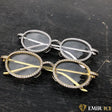
Discover the pieces available in the diamond glasses, diamond watch, and hip-hop jewelry set collections.
Frequent searches: how to film jewelry, photographing shiny jewelry, jewelry photo lighting, filming a gold chain, making a diamond sparkle in video, jewelry slow motion for clips, macro jewelry lens, jewelry photo settings, background for jewelry photos, reflections on jewelry in photos, close-up rap clip jewelry, b-roll jewelry, packshot jewelry, filming a watch, grazing light jewelry.

Une rivière de diamants est une ligne continue de pierres identiques serties l'une contre l'autre, en collier ou en bracelet. Découvrez la…
Read the article
Le prix d'un diamant dépend du carat, de la couleur, de la pureté, de la taille et de l'origine, naturelle ou de…
Read the article
Comment calculer le prix de l'or 18 carats : le cours de l'or pur du jour, multiplié par 75 % et par…
Read the article


