



Votre panier est vide
Choisissez un univers pour commencer.


Sur-mesure
Dessinons votre bijou
Emir ICE
Pour lui, pour elle, pour offrir
Accessories
Pour accompagner vos bijoux


4,7/5 sur 854 avis clients publiés par Loox (au 01/10/2026)
Choosing a women's wedding ring means balancing three things: the stone, the metal, and the size. This one-carat lab-grown diamond solitaire model settles the first question. As for the rest, everything is explained below—this is also part of how to choose an engagement ring without making a mistake: settling the size before the romance.
A real one-carat lab-grown diamond on a sleek band: the solitaire wedding ring celebrates the union with timeless elegance, without breaking the bank.
Crystallized pure carbon, 10/10 hardness, fire identical to a natural diamond. Grown via CVD/HPHT, VVS clarity, D-F color, full traceability, and zero extraction.
The center stone, highlighted by a sober and elegant band, shines with all its fire. The solitaire in its most beautiful expression.
✔ Stone: VVS lab-grown diamond, ~1 carat, solitaire setting
✔ Hallmarked metal, synthesis certificate upon request (gold)
✔ Comfortable to wear, hand-finished band
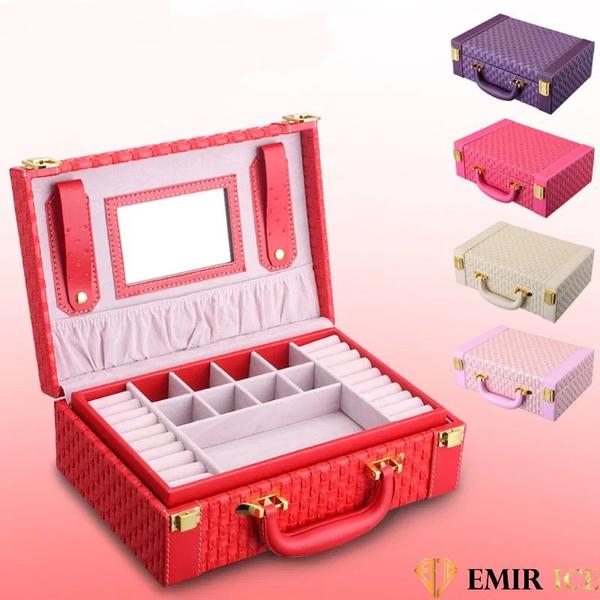
✔ Delivered in an Emirice jewelry box, ready to gift
The wedding solitaire, an eternal symbol of love, finally accessible: ethical and timeless.
At Emirice, every piece is designed to last and to leave a mark. Treat yourself to the sparkle that reflects you.
There is the piece, and there is the moment. A modern diamond solitaire ring is not chosen like an accessory: it is chosen for the second when the hand is reached out, when the light catches the stone, when no one says anything anymore. This lab-grown diamond solitaire was designed for that very second.
The stone is set high, exposed, free to capture the daylight as well as the light of a restaurant. This is the strength of an original engagement ring: it is visible from one end of the table to the other. On a slender hand, the band lengthens the finger; on a broader hand, it adds structure without feeling heavy. Compare in our engagement rings and our women's diamond rings, and read our engagement ring guide.
In France, custom places the ring on the left ring finger, elsewhere on the right: no rule is absolute, and our article on which finger to wear it covers the subject. This model ranges from 4US (47FR) to 7.5US (56FR): measure at the end of the day using the size guide, when fingers are at their maximum volume. A well-adjusted custom engagement ring does not spin and does not leave marks on the skin.
A lab-grown diamond remains a diamond: same carbon, same hardness, same fire. Only the origin changes, and that is often where the choice of a women's wedding band is decided. The facts are laid out without marketing in lab-grown diamond prices and moissanite vs diamond. Still hesitating? Compare with natural diamond and moissanite.
Everything is decided at the selector: solid silver or genuine gold, yellow, white, or rose finish. White gives a crisp tone that pushes the stone forward, yellow warms the complexion, and rose softens the whole. The same design thus becomes a women's engagement ring or a diamond solitaire ring depending on the chosen variant; our guide white gold or silver helps you decide.
| Setting type | Solitaire |
| Stone | Lab-grown diamond, ~1 carat |
| Metals | 925 Silver · Genuine 10K Gold · Genuine 14K Gold · Genuine 18K Gold |
| Finishes | Yellow gold · Rose gold · White gold |
| Sizes | 4US (47FR) · 4.5US (48FR) · 5US (49FR) · 5.5US (51FR) · 6US (52FR) · 6.5US (53FR) · 7US (54FR) · 7.5US (56FR) |
A word on the setting, as that is where the look is defined: a sleek diamond solitaire ring highlights the stone and goes with everything, while a halo or pavé setting gives more presence and visual width on the hand. Neither is better in absolute terms—just closer to her.
It is the only parameter that can ruin the moment, so let's fix it. Wrap a strip of paper around the base of the finger, mark the overlap, and measure: this figure in millimeters is your finger size. Another method, more discreet: measure the internal diameter of a ring already worn on the correct finger. Measure at the end of the day, and size up if the band is wide.
Eight sizes are offered here, from 4US (47FR) to 7.5US (56FR): the equivalencies are shown in the product options. For a surprise proposal, the safest way remains to discreetly borrow a ring she already wears on the correct finger and measure its internal diameter.
Yes: it is a lab-grown diamond, as indicated on this page. On a diamond engagement ring, this is the only thing that is not up for debate.
Measure the finger circumference, or the internal diameter of a ring already worn on the correct finger. If you are hesitating between two sizes, write to us before ordering.
In France, the wedding ring is traditionally worn on the ring finger of the left hand. Custom varies by country and family.
Compare with the rest of the selection: engagement rings, lab-grown diamond engagement rings, and all our rings.
14 jours après réception pour changer d’avis, sans avoir à vous justifier. Les frais de renvoi sont à votre charge ; le retour est gratuit si l’erreur vient de nous.
14 jours après réception pour les articles en stock. Les pièces fabriquées selon vos indications (personnalisation, sur-mesure) ne sont pas reprises, sauf défaut de conformité : les conditions exactes sont détaillées sur la page Retour et échange.
Retour et échange : la marche à suivreCarte bancaire (CB, Visa, Mastercard, American Express), Apple Pay ou Shop Pay. Le paiement est sécurisé : vos données bancaires ne nous sont jamais communiquées.
Paiement en plusieurs fois avec Klarna, selon le pays et le montant.
Une question avant de commander ? Notre service client vous répond du lundi au vendredi : info@emirice.com · +33 7 68 32 44 78 · formulaire de contact.
Mesurez une bague qui vous va déjà ou votre tour de doigt : le guide vous donne la taille correspondante parmi celles proposées pour ce modèle, et vous pouvez la choisir directement.
Guide complet des taillesEssuyez-le avec un chiffon doux après chaque port. Pas de frottement abrasif, qui userait la fine couche d’or, ni de produit chimique.
Eau tiède savonneuse et brosse à poils souples, rinçage, puis séchage avec un chiffon non pelucheux.
Il peut s’oxyder légèrement à l’air : un chiffon spécial argent ou un bain d’eau tiède savonneuse lui rend son éclat.
Guide des tailles
Mesurez en fin de journée, quand le doigt est à température normale. Entre deux tailles, prenez la plus grande.
1. Calibrez l’écran. Posez une carte bancaire sur l’écran, côté court contre le cadre, puis déplacez le curseur jusqu’à ce que les deux traits touchent exactement les bords de la carte.
2. Posez votre bague sur le cercle. Le bord INTÉRIEUR de la bague doit suivre le trait doré. Changez de taille jusqu’à trouver la bonne.

1 197 €
1CT lab-grown diamond solitaire engagement ring


